Beyond Drowsiness: The Cognitive Short Circuit Caused by CO2, PM and VOCs

When we are indoors with closed windows — at home or in the office — we often start yawning and tend to minimize the problem. We blame tiredness, a heavy lunch, or a lack of oxygen. However, what we perceive as simple drowsiness is actually the response of our central nervous system to low-level chemical intoxication. The air we breathe indoors does not simply enter our lungs: it alters our brain chemistry, our intellectual performance, and, over time, our neurological health.
For decades, indoor carbon dioxide (CO2) was considered merely an indicator of poor ventilation, assumed to be harmless to humans until extremely high concentrations were reached. Today, we know this is not true.
Outdoors, CO2 concentration is around 420 ppm (parts per million). In a meeting room or a closed bedroom, it can quickly exceed 1,500–2,500 ppm. At these levels, CO2 does not simply replace oxygen but acts as an active physiological modulator. Excess CO2 in the bloodstream alters blood pH levels. This change results in feelings of mental fog and the classic headache associated with stale air.
Pioneering studies conducted by the Harvard T.H. Chan School of Public Health have shown that at CO2 levels commonly found in modern buildings, cognitive functions experience a dramatic decline. Under these conditions, strategic thinking, information usage, and crisis-response abilities can decrease by up to 50%.
The Threat of Fine Particulate Matter

If CO2 clouds the mind in the short term, fine and ultrafine particulate matter (PM2.5 and PM1.0) present indoors represents a long-term structural threat. The smallest particles are capable of crossing the blood, brain barrier, the brain’s protective shield. When ultrafine particulate matter is inhaled, it can travel directly along the olfactory nerve, moving from the nasal cavity straight to the olfactory bulb and brain tissue.
Once these foreign particles reach the brain, the brain’s immune system recognizes them as invaders and releases inflammatory cytokines. Chronic exposure to this silent neuroinflammation is now considered by neurologists to be a potential co-factor in the early development of neurodegenerative diseases such as Alzheimer’s disease and Parkinson’s disease, as well as accelerated cognitive decline in older age.
The dangerous role of VOCs

Volatile Organic Compounds (VOCs), emitted by cleaning products, paints, flooring adhesives, and air fresheners, present another insidious characteristic: they are predominantly lipophilic, meaning they bind easily to fats. Since the human brain is composed of approximately 60% lipids, it becomes a perfect target for these gases. Many household solvents can interact with neuronal cell membranes, altering neurotransmitter transmission. Prolonged exposure, even at low concentrations, has been associated with mood swings, chronic irritability, and short-term memory difficulties.
Understanding the neurological impact of indoor air radically changes the way we should design and live in our spaces. We cannot optimize the performance of our minds if we do not optimize the invisible mixture of gases in which they are immersed every day. The true revolution in cognitive well-being begins with monitoring the air we breathe within our own walls.
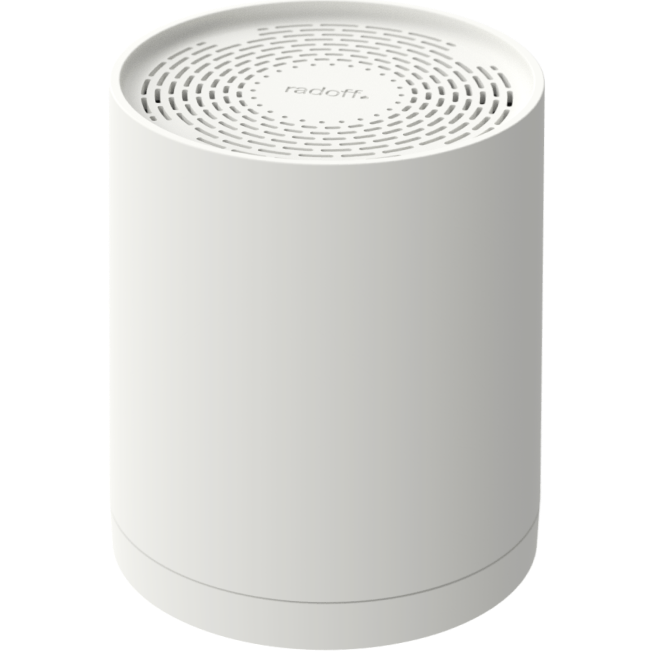
Discover Radoff solutions to stay constantly informed about the air you breathe in your living spaces:
If you own a business and care about the wellbeing of employees and customers, contact us to find the perfect solution for your company.
Contact us: https://radoff.life/form-business