The hidden costs of polluted air and how to avoid them

When we talk about indoor air quality, our minds instantly go to health: allergies, breathing, and physical well-being. Yet, there is a whole other side to the coin that we often ignore. The air we breathe at home and in the office directly impacts our wallets, our mental clarity, and even the lifespan of our technology.
If we think that simply opening a window every now and then is enough, we might be underestimating some crucial dynamics that are affecting our daily lives.
The A-Class Energy paradox: how energy efficiency seals the environment

In recent years, we have made giant leaps in thermal insulation. Building envelopes, triple-glazed windows, and perfect seals keep the heat in during winter and the cool in during summer, drastically cutting utility bills.
However, this flawless insulation has created a side effect: it eliminates natural ventilation. Without a constant and controlled exchange of air, indoor pollutants (radon gas, fine particulate matter, carbon dioxide, humidity, and volatile organic compounds) remain trapped inside.
Monitoring indoor air continuously is the only way to find the ideal balance meaning you ventilate only when actually necessary, avoiding any waste of thermal energy.
The drop in focus and productivity

Have you ever felt that classic afternoon slump or struggled to focus around 3 PM at the office or during a remote work session? We often blame our lunch. In most cases, however, the real culprit is CO2 (carbon dioxide).
In a closed room, especially with multiple people, CO2 levels spike quickly. Several studies on cognitive performance show that when carbon dioxide concentrations cross certain thresholds, our ability to make strategic decisions drops drastically, reaction times slow down, and the rate of minor, careless mistakes increases.
Monitoring the air in the office or at home is a genuine driver for optimizing productivity. Knowing when the air is saturated allows you to take timely action, keeping your brain sharp and reactive.t You can’t manage what you don’t measure.
The real issue with indoor pollutants and imbalances is that they are invisible. We cannot simply rely on the feeling of “heavy air,” because by the time we notice it, it is already too late and our performance has already dropped.
Using smart monitoring sensors turns the invisible into concrete data. Only by knowing the actual levels of environmental parameters inside our rooms can we decide when and how to intervene—optimizing energy consumption, protecting our spaces, and unlocking our mind’s full potential.
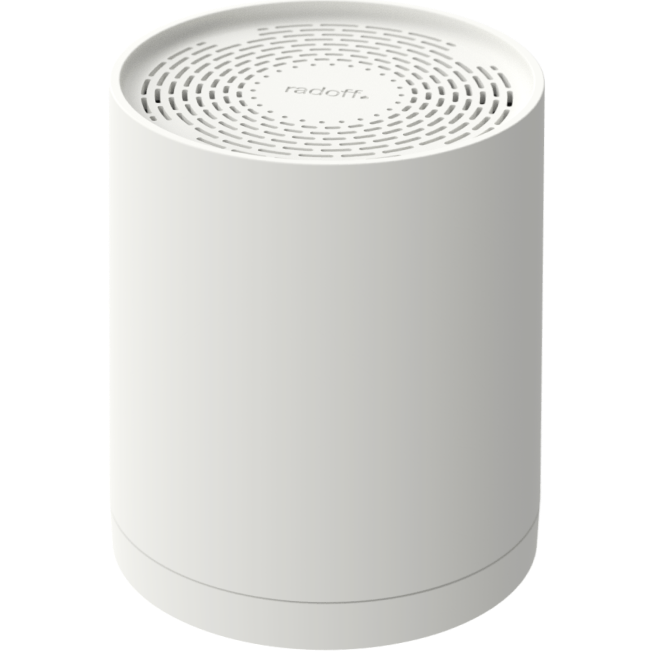
Discover Radoff solutions to always stay updated on what you breathe in your living and working spaces:
If you run a business and care about the well-being of your employees and clients, contact us to find the perfect solution for your business.
Contact us: https://radoff.life/form-business